Big feelings are not the enemy. They are signals, often wise and often inconvenient, that a child’s brain-body system has hit a limit. Emotional regulation is the set of skills that helps a child notice those signals, understand what they mean, and choose a response that fits the moment. In clinical rooms and family living rooms, I see time and again that children can learn these skills, and they learn them faster when the adults around them tune their own nervous systems and speak a common language.
What emotional regulation looks like at different ages
A preschooler who dissolves when the blue cup is in the dishwasher is not being manipulative. Their language, motor planning, and sensory processing are still under construction. The meltdown is the best strategy their immature brain can muster. In this stage, body-based tools and co-regulation from adults do the heavy lifting. Short, predictable routines help more than long explanations.
Elementary school adds layers. Kids carry social rules, classroom expectations, and homework. Emotions show up as irritability, silliness, defiance, or shutdown. You might see a child who can hold it together in class then explode in the car after school. That rebound tells you their tank is empty. Here, we blend concrete tools with problem-solving and early cognitive strategies.
In adolescence, the stakes climb. Hormonal shifts, social comparison, academic pressure, and identity work make surges of emotion feel stronger and more confusing. Teens can use complex tools if they trust the process. They need collaboration rather than lectures. Humor helps. Privacy helps too.
Across ages, the common thread is this: the faster the nervous system feels safe, the easier everything else becomes.

How dysregulation shows up in real life
One eight-year-old I worked with, let’s call him Jonah, had a pattern of good mornings and chaotic afternoons. His teacher described him as kind and bright, then added that he ripped papers when corrected and bolted for the reading nook. In session, his shoulders tightened whenever we talked about mistakes. We mapped his triggers, which turned out to be transitions and written feedback in red pen. None of this meant Jonah was oppositional. It meant that specific cues predicted a stress response. Once we adjusted the context and gave him tools that worked in motion rather than words first, the paper ripping dropped to near zero within six weeks.
Parents often ask for a dramatic fix. What usually works is less dramatic and more durable: dozens of small, repeated moments in which the child feels seen and competent while a feeling rises and falls. That is the heart of child therapy for regulation.
What therapy targets when the goal is regulation
In child therapy focused on emotional regulation, we are not https://www.nkpsych.com/adhd-testing aiming for a child who never gets upset. That is neither realistic nor healthy. The goals are to:
- build interoception, the sense of what is happening in the body widen a workable middle zone between shutdown and explosion increase the child’s repertoire of responses that actually help strengthen parent-child co-regulation so skills generalize at home and school
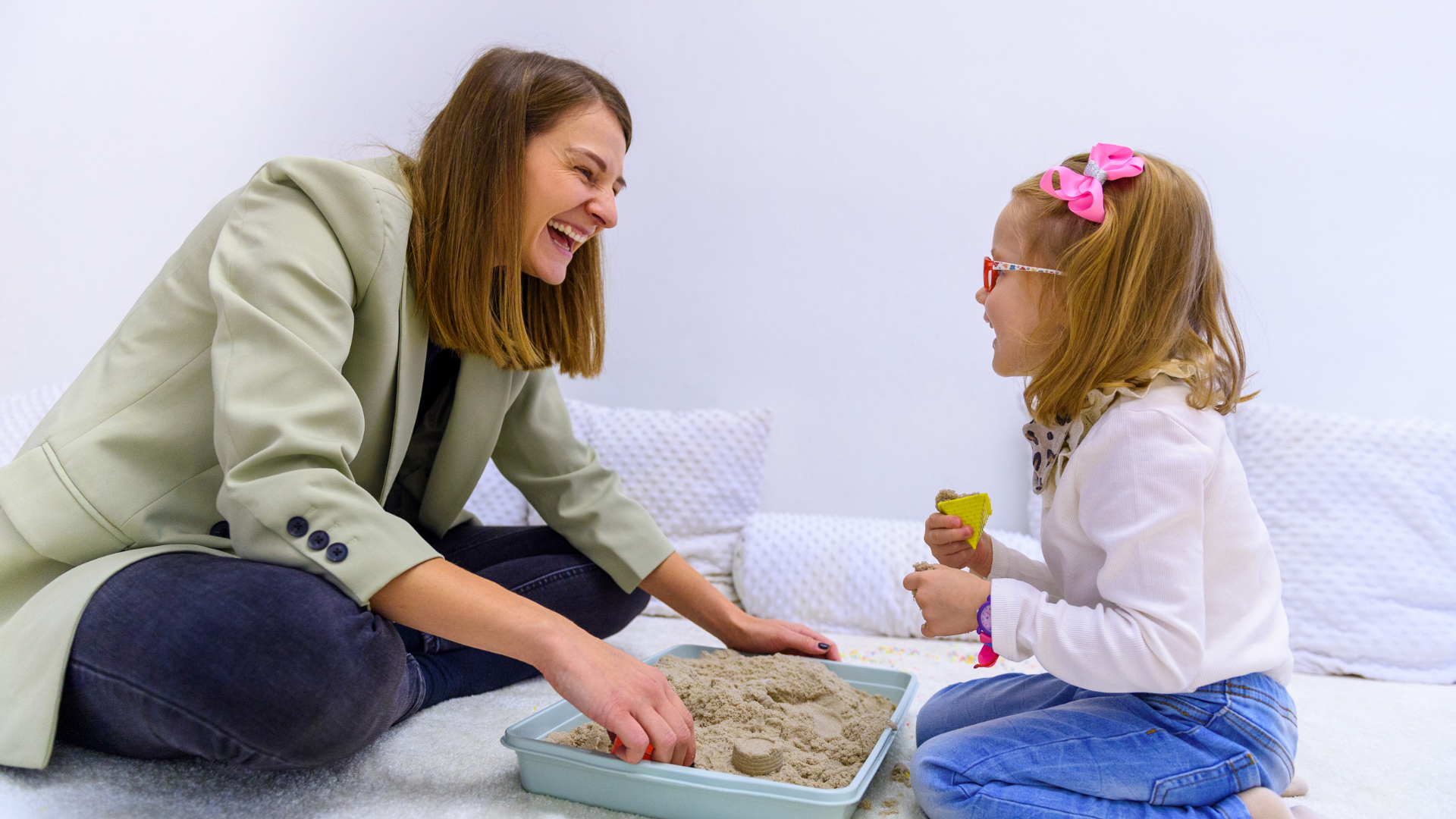
Therapy should feel active. Children move, play, draw, and tell stories while they learn. We fold skills into games because practice has to be frequent to stick, and joy makes repetition possible.
The therapist’s toolkit, translated into kid language
Play is the delivery system. Evidence-based methods give us the ingredients. When a child uses their whole body to solve a puzzle or role-plays a bossy dragon who keeps scaring other creatures by accident, we are quietly teaching the brain and nervous system to tolerate feelings and choose actions.
Cognitive behavioral therapy can be surprisingly concrete with kids. We might draw a thought bubble and a feeling thermometer, then play a board game where landing on certain squares means practicing a coping move. The language is simple. First, name the feeling. Second, check the body. Third, try a tool. Then reflect. Over time, kids start to anticipate their own spikes.
Body-based tools matter because the autonomic nervous system responds faster than words. I will coach a child to do a slow belly breath that expands a stuffed animal resting on their tummy, or a four-second inhalation, six-second exhalation with a finger-trace on the table. I like movement sets that look like play but shift physiology: wall push-ups, isometric squeezes with a therapy putty blob, box breathing while balancing on a wobble stool. Five to ten reps, two to three times a day, beat one long session.
For kids with a trauma history, EMDR therapy can be adapted with play and art to reprocess stuck memories that keep the nervous system on high alert. A ten-year-old who flinches at loud voices may not calm down with breathing alone until their brain no longer reads a raised voice as present danger. With EMDR, we pair gentle bilateral stimulation, like butterfly taps, with images and beliefs to help the brain store the memory in a calmer file. Parents often notice more flexibility within a few sessions once a core incident has been processed.
Sensory strategies are not a cure-all, but they are powerful regulators when matched to the child’s profile. Chewy jewelry, weighted lap pads, or a crunchy snack before homework can feed an under-responsive system. Ear defenders or a quiet corner with a visual boundary can protect the overwhelmed child during transitions. For one second grader I saw, switching to pencil grips and a slanted writing board cut his end-of-day meltdowns in half because his hand no longer ached through worksheets.
Visual supports and routines create predictability. A morning flow chart with pictures reduces nagging and decision fatigue. A traffic-light plan allows kids to notice yellow moments before they hit red. We keep it concrete, for example, green means I can solve this, yellow means I need a tool or a break card, red means I need a safe adult and space. The child helps design the plan so it feels like their map, not a rule imposed on them.
Parents are half the treatment
No child learns regulation in a vacuum. Parent coaching is not an add-on. It is the transfer of skills to the ecosystem where the child lives. A parent who can stay steady during a tantrum is a stronger intervention than any worksheet.
When I coach parents, we practice scripts. We delete lectures. We improve timing. For example, during a meltdown, language shrinks. Words like safe, here, with you, and short reflections like you are mad and your body is tight work better than paragraphs about consequences. After the storm, we debrief using a simple arc: what happened, what did your body feel, what helped a little, what might we try next time. We aim for two minutes, then return to normal life. This helps the event become a lesson instead of a family crisis.
Family therapy can speed up progress when patterns between siblings or between a child and a parent keep sparking dysregulation. Maybe the older sister pokes during transitions, or a parent who hates noise snaps at the loudest child. In a few sessions, we can map these cycles, add small buffers, and create new rituals. Even couples therapy for parents has a place. When partners align on limits and tone, kids spend less energy testing and more energy learning skills. A parent who feels supported can tolerate a few more messy mornings without flipping their lid.
Tools kids can carry in their pockets
Here is a compact set I teach often. We practice in session while the child is calm, then introduce gentle challenges.
- Belly buddy breath: Lie on your back, place a small stuffed animal on your stomach, and breathe it up for a count of four, then down for six. Do five breaths, twice a day. Use it at bedtime and before tests. Five-sense scan: Look for five things you see, four you feel, three you hear, two you smell, and one you can taste or imagine tasting. This anchors attention when thoughts race. Pressure reset: Press both palms into a wall, slow and steady, for ten seconds, three rounds. For classrooms, use chair push-downs with hands on the seat. Name it to tame it: Say the feeling out loud in one or two words. Then rate it like weather, for example, stormy eight or breezy two. This tilts the brain toward problem-solving. Break card: A pre-agreed pass the child can show to step out for two minutes, drink water, or move to the quiet corner. The plan is practiced and respected, not bargained in the moment.
Parents sometimes ask whether tools like fidgets are gimmicks. They are not if they match the need and have clear use rules, such as quiet, eyes on speaker, hands busy. A silicone tangle can keep a hand occupied so the listening network stays online. The rule set prevents the tool from becoming another distraction.
What therapy looks like across six to twelve weeks
I like to outline an arc so families know what to expect. In the first one to two sessions, we focus on rapport and observation. I want to see the child move, play, and react to small frustrations. We identify two or three high-yield skills to start.
In weeks three to six, we practice and generalize. Parents get coaching in parallel. If school is a trigger, I talk with the teacher. We set up visual supports and micro-practices at home, for example, 90 seconds of wall push-ups before dinner, or a two-minute quiet corner reset after homework.
By weeks seven to twelve, we refine, add cognitive pieces, and troubleshoot. We may add brief EMDR therapy work if a traumatic memory keeps hijacking the system, or small social experiments for kids whose anxiety binds them. If progress stalls, we check fit: Do the tools match the sensory profile? Are consequences overshadowing practice? Is sleep or nutrition undermining gains?
Most families see measurable changes by week six when they practice roughly five minutes a day, broken into tiny bites. The exact pace varies. A child with recent grief or neurodevelopmental differences might need a slower ramp with extra co-regulation.
ADHD, anxiety, and the role of testing
Emotional regulation struggles often ride alongside attention challenges. A child who cannot sustain focus for tasks may look oppositional when really they are overwhelmed by working memory demands and impulsivity. ADHD testing, when done well, does not label a child into a corner. It clarifies patterns so interventions match reality. If testing shows a clear attention profile, we adjust expectations, scaffold tasks into bite-size chunks, and teach movement-based regulation as a first-line tool. Medication becomes a considered option, sometimes a powerful one, and therapy remains essential to build habits and confidence.
Anxiety also masquerades as anger in many kids. The child who argues about leaving the house may be protecting themself from the uncertainty of a new environment. We look for bodily cues like stomachaches, rigid routines, or sleep-onset delays. The treatment plan for anxiety blends exposure work with regulation skills. The exposure is graded and respectful. We take one step into discomfort, then use a coping tool to show the brain it can handle the feeling. That is how confidence grows.
Autism brings its own regulation landscape. Sensory sensitivities, changes in routine, and social decoding challenges put more load on the system. Visual supports and predictable scripts help. We respect stimming that self-regulates while teaching additional options for crowded or noisy settings.
A short script for the hardest moments
Parents ask for something to say when their child is at a ten. The exact words matter less than the stance. Keep it short, warm, and certain.
- You are safe. I am here. Your body feels too big right now. Let’s breathe or push the wall together. You can choose the break corner or water first. We will talk about the problem after your body is calm. You did it. Your breathing helped. Next time, we will use your break card sooner.
These phrases do not fix everything. They reduce fuel to the fire and pair the parent’s presence with regulation. Over time, the child internalizes the rhythm and starts to initiate tools earlier.
Rewards, consequences, and the middle path
Sticker charts can help some children practice a new behavior, especially when tied to specific, daily actions like using a break card or starting homework on time. The pitfall is making the chart the point. We anchor the reward to effort, not perfection. If a child used a tool during a yellow moment, they earn. If the day went sideways, we reset without shame.
Natural consequences still have a place. If a child throws a toy, that toy takes a rest. If a teen shouts insults, they repair the relationship later, maybe with a written note or a small act of service. Consequences carry weight when they are consistent, brief, and delivered with self-control. Lengthy punishments teach resentment, not regulation.
Time-out is often misused and gets a bad reputation. A punitive time-out in isolation can escalate fear. A regulated time-in, where the adult stays near and models calm, works better for younger children. For older kids, a self-directed reset with a timer and a re-entry plan respects autonomy and teaches skills.

Working with schools without burning bridges
Teachers juggle needs that would make most adults wilt by lunchtime. Collaboration beats confrontation. Share what works at home. Ask for the classroom version. A break card can become a pencil-sharpening routine at predictable times. A movement set might be delivered by a quick errand to the office. Try to pick one or two targets for a month, like smoother transitions after lunch or getting started on independent work within two minutes, and measure those. If the child receives services, weave goals into the IEP or 504 plan in plain language.
I like short feedback loops. A simple daily index card with two checkboxes and a note line can change a month of afternoons. One third grader I saw turned a daily meltdown into a minor grumble after his teacher added two movement breaks and circled a smiley face when he used his break card before shouting. That level of specificity helps more than talk about behavior in general.
How trauma changes the map
Children who have lived through medical trauma, violence, or chronic stress are not just emotionally reactive. Their nervous systems are tuned to detect threats and act quickly. Telling them to calm down without addressing the underlying pattern is like asking a smoke detector to hush without clearing the smoke. EMDR therapy, child-centered play therapy, and caregiver-focused models help retune the system. We still use the same surface tools, but we add safety-building beneath them: predictable routines, gentle exposure to formerly scary cues, and caregiver repair work that helps the child trust again.
For one teenager who braced whenever doors closed, we paired EMDR with practice sessions in rooms with doors partly ajar. Over eight sessions, her startle dropped, and her panic in classrooms eased enough that she could attend full days. The tools did not erase fear. They taught her body she could ride the wave.
Cultural and family context
Not all families speak the same language about feelings, and not all children have the same leeway to express them. A tool that fits one household can feel alien in another. Therapists serve best when we ask about family values, rituals, and discipline approaches before offering strategies. Regulation can ride on music and prayer in one family, on humor and movement in another. The principle remains: practice small, often, and with compassion.
Grandparents, nannies, and older siblings often shape daily rhythms more than a therapist ever could. Involving them, even once or twice, avoids mixed messages. I have watched a grandparent’s quiet ritual of afternoon tea become the anchor that keeps a child from unraveling after school.
Measuring what matters
Progress is easier to spot when you decide ahead of time how you will notice it. I ask families to pick two indicators and track them for four weeks. Examples include number of red-zone meltdowns per week, time to calm under ten minutes, or number of school days without a call home. A one third reduction in four weeks is a realistic early win when the plan fits the child. If the numbers refuse to budge, we adjust inputs, not blame the child.
Sleep and nutrition are often the hidden levers. A child who gets 30 to 60 minutes more sleep can look like a new person. Protein at breakfast, hydration through the day, and a snack before homework reduce tired-brain irritability. Screens deserve honest scrutiny. Removing them entirely can backfire if they serve as social glue. Setting timing and content boundaries helps. I have seen major gains simply by ending gaming 90 minutes before bedtime and moving devices out of bedrooms.
When to seek extra layers of help
If a child hurts themself or others, loses interest in things they used to love, avoids school for days, or talks about wanting to disappear, move quickly. Safety planning, medical evaluation, and more intensive therapy may be necessary. Some children benefit from a short course of medication to lower physiological arousal so they can learn skills. Others need groups to practice social regulation in a safe setting.
If ADHD testing or learning assessments are on the fence, consider them when school struggles, attention blinks, and regulation issues persist across settings for six months or more. Formal results can unlock accommodations that reduce daily friction, like extra transition time or reduced homework volume.
What makes change stick
Nothing in regulation training is glamorous. The secret is repetition tied to moments that matter. A child who belly-breathes five times a day at calm times will be more able to reach for it when their heart hammers. A parent who can hold neutral tone through ten hard mornings teaches stability the child will borrow when alone.
I often end sessions by asking the child to teach the parent the week’s skill. The act of teaching cements learning and reverses the one-down feeling that dysregulated kids carry. A seven-year-old showing their father how to do a wall push-up reset is not just moving their arms. They are seeing themself as someone with tools.
Emotional regulation lives in tiny decisions multiplied by days. Families who keep the bar doable win. Five minutes of practice daily, one new strategy per month, and kind persistence will take you further than heroic sprints.
Where couples and family work fit into the long game
Parents who disagree on discipline usually have different triggers. One cannot stand disrespect. The other cannot stand tears. Couples therapy can surface these patterns and find a shared plan that keeps the child’s growth at the center. The point is not perfect alignment. It is a strong enough alliance that, in the heat of a Tuesday morning, the adults can back each other up.
Family therapy brings the whole system into the room. Siblings practice interrupts without shouting. Parents role-model repair after they snap. The child in therapy sees that everyone is learning, not just them. Shame loosens its grip, and skills spread faster.
The bottom line
Children do not need to be calmer by nature to thrive. They need to be skilled, and skills can be taught. Good child therapy blends play with science, gives parents practical scripts, and matches tools to the child’s body and context. Sometimes that includes EMDR therapy for trauma memories. Sometimes it includes ADHD testing to tune expectations and supports. Often it includes a dose of family therapy or couples therapy to steady the home base.
The work pays off in ordinary moments. A child who once slammed doors now asks for the break corner. A teen who used to skip class texts the school counselor and uses a pressure reset. A parent who used to threaten now says, I am here. Let’s try your tool. That is emotional regulation moving from the therapy room into daily life, where it belongs.
Name: NK Psychological Services
Address: 329 W 18th St, Ste 820, Chicago, IL 60616
Phone: 312-847-6325
Website: https://www.nkpsych.com/
Email: [email protected]
Hours:
Sunday: Closed
Monday: 8:00 AM - 5:00 PM
Tuesday: 8:00 AM - 5:00 PM
Wednesday: 8:00 AM - 5:00 PM
Thursday: 8:00 AM - 5:00 PM
Friday: 8:00 AM - 5:00 PM
Saturday: Closed
Open-location code (plus code): V947+WH Chicago, Illinois, USA
Map/listing URL: https://www.google.com/maps/place/NK+Psychological+Services/@41.8573366,-87.636004,570m/data=!3m2!1e3!4b1!4m6!3m5!1s0x880e2d6c0368170d:0xbdf749daced79969!8m2!3d41.8573366!4d-87.636004!16s%2Fg%2F11yp_b8m16
Embed iframe:
"@context": "https://schema.org",
"@type": "ProfessionalService",
"name": "NK Psychological Services",
"url": "https://www.nkpsych.com/",
"telephone": "+1-312-847-6325",
"email": "[email protected]",
"address":
"@type": "PostalAddress",
"streetAddress": "329 W 18th St, Ste 820",
"addressLocality": "Chicago",
"addressRegion": "IL",
"postalCode": "60616",
"addressCountry": "US"
,
"openingHoursSpecification": [
"@type": "OpeningHoursSpecification",
"dayOfWeek": "Monday",
"opens": "08:00",
"closes": "17:00"
,
"@type": "OpeningHoursSpecification",
"dayOfWeek": "Tuesday",
"opens": "08:00",
"closes": "17:00"
,
"@type": "OpeningHoursSpecification",
"dayOfWeek": "Wednesday",
"opens": "08:00",
"closes": "17:00"
,
"@type": "OpeningHoursSpecification",
"dayOfWeek": "Thursday",
"opens": "08:00",
"closes": "17:00"
,
"@type": "OpeningHoursSpecification",
"dayOfWeek": "Friday",
"opens": "08:00",
"closes": "17:00"
],
"geo":
"@type": "GeoCoordinates",
"latitude": 41.8573366,
"longitude": -87.636004
,
"hasMap": "https://www.google.com/maps/place/NK+Psychological+Services/@41.8573366,-87.636004,570m/data=!3m2!1e3!4b1!4m6!3m5!1s0x880e2d6c0368170d:0xbdf749daced79969!8m2!3d41.8573366!4d-87.636004!16s%2Fg%2F11yp_b8m16"
NK Psychological Services provides therapy and psychological assessment services for children, adults, couples, and families in Chicago.
The practice offers support for concerns that may include ADHD, autism, trauma, relationship challenges, parenting concerns, and emotional wellbeing.
Located in Chicago, NK Psychological Services serves people looking for in-person care at its South Loop area office as well as secure virtual appointments when appropriate.
The team uses a psychodynamic, relationship-oriented approach designed to support meaningful long-term change rather than only short-term symptom relief.
Services include individual therapy, child therapy, family therapy, couples therapy, EMDR therapy, and psychological testing for diagnostic clarity and treatment planning.
Clients looking for a Chicago counselor or psychological assessment provider can contact NK Psychological Services at 312-847-6325 or visit https://www.nkpsych.com/.
The office is located at 329 W 18th St, Ste 820, Chicago, IL 60616, making it a practical option for clients seeking care in the city.
A public business listing is also available for map directions and basic local business details for NK Psychological Services.
For people who value thoughtful, collaborative care, NK Psychological Services presents a team-based model centered on depth, context, and individualized treatment planning.
Popular Questions About NK Psychological Services
What does NK Psychological Services offer?
NK Psychological Services offers therapy and psychological assessment services for children, adults, couples, and families in Chicago.
What kinds of therapy are available at NK Psychological Services?
The practice lists individual therapy for adults, child therapy, family therapy, couples therapy, EMDR therapy, and psychodynamic therapy among its services.
Does NK Psychological Services provide psychological testing?
Yes. The website states that the practice provides comprehensive psychological and neuropsychological testing, including support related to ADHD, autism, learning differences, and emotional functioning.
Where is NK Psychological Services located?
NK Psychological Services is located at 329 W 18th St, Ste 820, Chicago, IL 60616.
Does NK Psychological Services offer virtual appointments?
Yes. The website says the practice offers in-person sessions at its Chicago location and secure virtual appointments.
Who does NK Psychological Services serve?
The practice works across the lifespan with individuals, couples, and family systems, including children and adults seeking therapy or assessment services.
What is the treatment approach at NK Psychological Services?
The website describes the practice as evidence-based, relationship-oriented, and grounded in psychodynamic theory, with a collaborative consultation-centered care model.
How can I contact NK Psychological Services?
You can call 312-847-6325, email [email protected], or visit https://www.nkpsych.com/.
Landmarks Near Chicago, IL
Chinatown – The NK Psychological Services location page notes the office is about four blocks from the Chinatown Red Line station, making Chinatown a practical local landmark for visitors.Ping Tom Park – The practice states the office is directly across the river from the ferry station in Ping Tom Park, which makes this a useful nearby reference point.
South Loop – The office sits within the broader Near South Side and South Loop area, a familiar point of reference for many Chicago residents.
Canal Street – The location page references Canal Street for nearby street parking access, making it a helpful directional landmark.
18th Street – The practice specifically notes entrance and garage details from 18th Street, so this is one of the most practical navigation landmarks for visitors.
I-55 – The office is described as accessible from I-55, which is helpful for clients traveling from other parts of Chicago or nearby suburbs.
I-290 – The location page also identifies I-290 as a convenient approach route for appointments.
I-90/94 – Clients driving into the city can use I-90/94 as another major access route mentioned by the practice.
Lake Shore Drive – The office notes accessibility from Lake Shore Drive, which is useful for clients traveling from the north or south lakefront areas.
If you are looking for therapy or psychological assessment in Chicago, NK Psychological Services offers a centrally located office with both in-person and virtual care options.